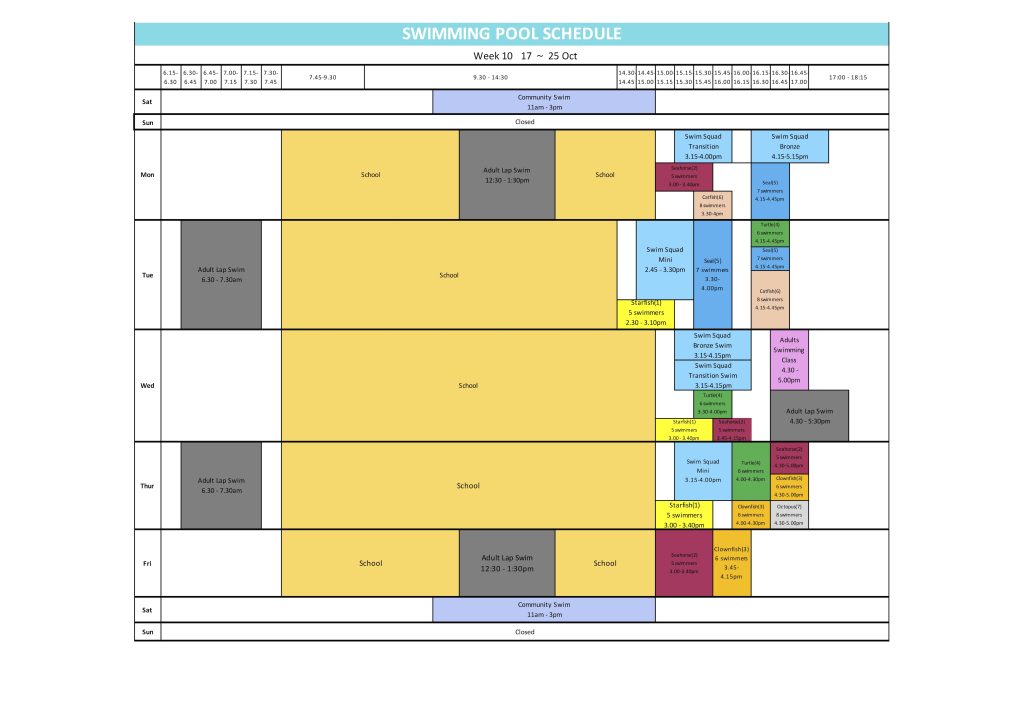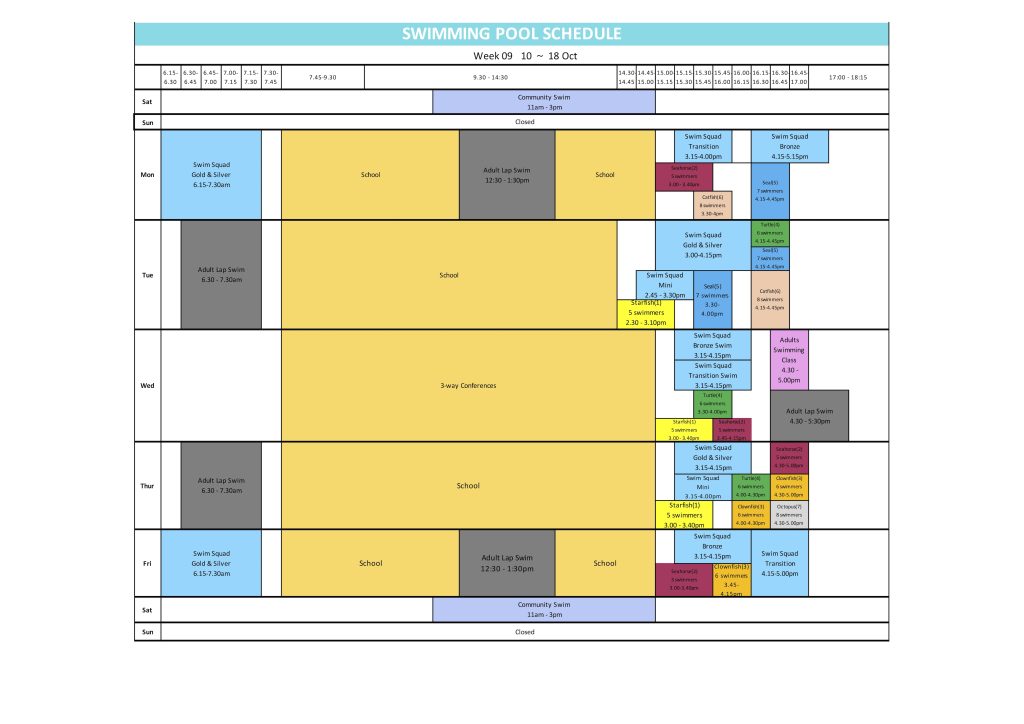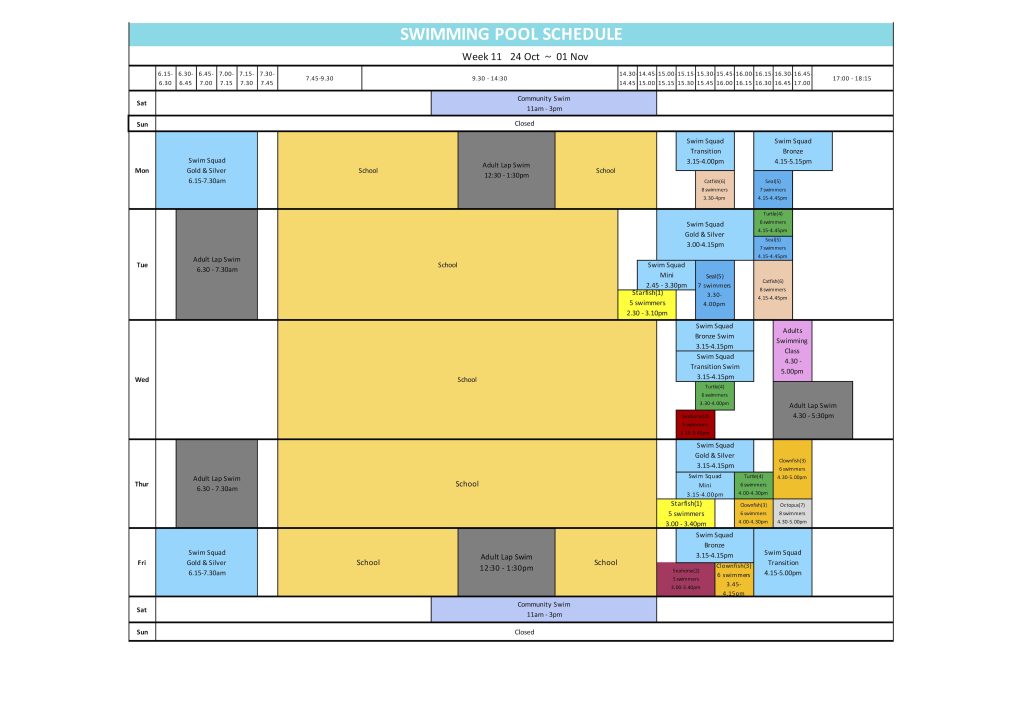
Swimming Pool Schedule – Week 11
Are Adults Motivated in a Similar Way to Students?
Next week I will be presenting a workshop at the annual EARCOS leadership conference in Bangkok. This year I have been digging deep into the change and transitions. This is partly to help my successor, Thalia Nawi PhD, with her transition to NIS and to help my own transition out of NIS. During studies at the University of Bath in the UK I spent a lot of time on two things – one was strategy, and the other was how leaders can motivate teaching colleagues. One of the authors whose work really resonated with me is Thomas Sergiovanni. In my presentation and workshop next week, titled ‘Leadership Change, Cultural Challenge’, I will draw upon Sergiovanni’s work.
Sergiovanni proposed that the most effective schools benefit from an organisational approach which is ‘culturally tight, structurally loose’. Below is a short three-point summary.
Strong shared values, purpose, and norms create coherence.
Effective schools are “culturally tight” because educators are united by a common moral purpose, shared beliefs about teaching and learning, and collective commitments to students. Culture trumps rules or supervision.
Professional autonomy enables responsiveness and innovation.
Schools are “structurally loose” because teachers need flexibility to exercise professional judgment in response to diverse learners. Excessive bureaucracy and tight control can limit creativity and instructional effectiveness.
Community replaces compliance as the organising force.
Rather than relying on hierarchy or monitoring, successful schools function as communities where shared commitments generate accountability. People do the right work because they believe in the school’s purpose, not because they are required to comply.
When I re-read one of his books, ‘Leadership: What’s In It For Schools?’ I realised that the NIS commitment to student voice and student choice is very much informed by the approach to supporting teachers with trust and advocacy rather than imposing rigid structures and excessive bureaucracy. What do you think?
Have an awesome October,
Laurie McLellan
School Director
成年人与学生的内在驱动力,本质上是否相通?
下周我将前往曼谷,参加EARCOS年度教育领导力大会,并在会上主持一场工作坊。今年我一直在深度梳理“变革与过渡”相关的议题,一方面是为了协助我的继任者Thalia Nawi博士顺利完成入职NIS的衔接过渡,另一方面也是为我自己即将开启的离任交接做好准备。早年在英国巴斯大学深造期间,我投入大量精力深耕两大方向:一是教育战略规划,二是校领导如何有效激发教学团队的内驱力。其中教育学者Thomas Sergiovanni的研究让我深受共鸣,下周我这场题为《领导力变革,文化的挑战》(Leadership Change, Cultural Challenge)的分享,就将依托他的理论体系展开。
提出,真正高效能的学校,受益于“文化上紧密凝聚,结构上灵活宽松”的组织管理模式,核心可以归纳为三点:
共同的价值观、办学目标与行为准则,构建起全校的内在凝聚力
高效能学校之所以能做到“文化紧密”,是因为全体教育工作者拥有共同的教育使命、对教与学的共同信念,以及对学生成长的共同承诺。在这样的校园里,文化的感召力远胜于冰冷的规则条文与自上而下的监督管控
专业自主权让教师能灵活响应需求、迸发创新活力
学校在“结构上保持宽松”,是因为教师需要足够的灵活度,才能针对不同特质的学生做出专业判断。过度的官僚流程与严苛管控,只会束缚教学创造力,最终削弱实际的教学成效。
以集体共识替代被动服从,成为校园运行的核心驱动力
成功的学校不再依赖层级指令与过程监督,而是将自身建设成为一个拥有共同使命的社区。全体成员的共同承诺生成内在责任感。大家主动做好每一项教育工作,是因为发自内心认同学校的办学初心,而非仅仅出于规则要求的被动服从。
重读Sergiovanni 的著作《领导力:学校的核心要义》(Leadership: What’s in It for Schools?)时我恍然发现,NIS对“听我说&让我选”的坚持,与这一理念完全契合——我们始终选择用信任与支持赋能教师,而非用僵化的组织架构和冗余的行政程序束缚他们。对此,你有着怎样的思考?
忽于水底见青山,我言秋日胜春朝。愿您的十月一切顺遂。
Laurie McLellan
School Director
| When students capture and explain their learning in Seesaw, teachers get a richer view of what students know and how they’re thinking. Seesaw gives students multiple ways to make their learning visible through photos, videos, audio, screen recordings, and more. |
| Something to try! |
| This week, make learning visible with Seesaw. Create one opportunity for students to show or explain their thinking in Seesaw: 📸 Capture hands-on learning: Have students photograph work that happens away from the screen, like math manipulatives, science experiments, or art projects. 🎙️ Encourage explanation: Invite students to use audio, video, or screen recording to explain their thinking, not just submit an answer. 📁 Build their learning story: Save meaningful work in students’ digital portfolios so you and your students can reflect on growth over time and share learning with families. Conferences coming up? Seesaw helps bring student learning to life during student- or teacher-led conferences using the work already captured in students’ digital portfolios. Check out our teacher guide and student guide for resources to help students reflect on their progress, share their learning, and take ownership of their growth. |
Dear All,
Please support our secondary students by voting for their artwork in the 13th CSR Students’ Art Competition!
You can vote for the following artwork numbers, all created by our secondary students:
2, 5, 6, 7, 8, 9, 10, 11, 12, 13, 14 and 15.
Important: When voting, you must also select an artwork in the “10 Years Old & Under” category. Otherwise, you will not be able to submit your vote. There are no NIS students participating in this category, so please feel free to vote for whichever artwork you like best!
Voting link:
https://mp.weixin.qq.com/s/O2945yqe76sJtCFnyVDodQ
Voting deadline: 24:00 on 19 October 2026.
Every vote helps! Thank you for supporting our students, celebrating their creativity, and helping their artwork receive more recognition.
Ms Klyuk
Please carefully read the notice below to understand the eligibility requirements, precautions, and safety information before blood donation.
Health Standards for Blood Donors:
Age: 18 to 55 years old (those with recent donation history may extend up to 60 years old).
Weight: At least 50 kg for males and 45 kg for females.
Blood Tests: Hemoglobin and transaminase levels must meet the required standards; hepatitis B surface antigen, syphilis screening, and other tests must also meet the required criteria. No underlying diseases such as hypertension, coronary heart disease, diabetes, or asthma. Normal heart and lung function, no enlarged liver or spleen, and no deformities or severe disabilities.
Precautions Before Blood Donation:
Please bring valid identification on the day of donation, such as an ID card, driver’s license, or medical insurance card.
Do not donate blood on an empty stomach; avoid alcohol the day before donation. No fever, severe cold, or allergic symptoms within one week prior to donation. Do not take aspirin or aspirin-containing medication within 5 days before donation. Women should avoid donating blood during menstruation and within three days before or after their period. Ensure sufficient sleep the day before donation and avoid excessive fatigue. After recovering from influenza with fever, you may donate blood after 7 days.
Safety of Voluntary Blood Donation:
The human body has a strong self-regulation ability. After donation, lost water and inorganic salts are replenished within 1–2 hours as tissue fluid enters the blood vessels. Lost plasma proteins are replenished through accelerated synthesis in the liver and return to normal within a few days. Blood cells have a natural lifespan; even without donation, old cells are continuously replaced by new ones. Moderate blood donation (200–400 mL per session) does not harm health and allows the body to naturally replenish its blood components. After donation, avoid strenuous exercise for 24 hours and maintain a balanced diet, appropriate exercise, and a regular lifestyle.
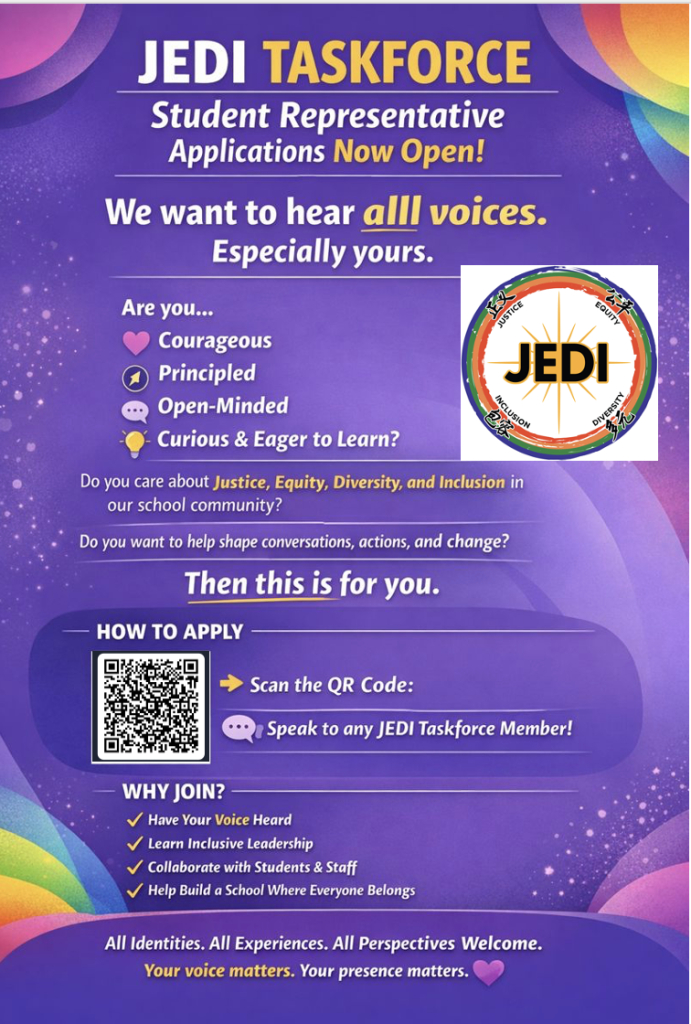
Good news! The JEDI T-shirt is officially ready for ordering. For full details — including sizing, pricing, and how to place your order — please refer to the poster below. Don’t miss out — place your order before Oct. 23!
Best wishes,
There is an upcoming EARCOS webinar, Lift Every Voice: Building Inclusive Classroom Libraries for Every Learner, which may be particularly relevant to your work supporting literacy, student engagement, and inclusive learning environments.
On Saturday, October 3 at 9:00 AM (HKT), EARCOS will host Julia Torres, a nationally recognized teacher educator, veteran language arts teacher, librarian, and teen programs administrator in Denver, Colorado. She facilitates teacher development workshops focused on equity and access in literacy instruction and librarianship.
The webinar will provide an opportunity to consider how classroom libraries can better reflect and serve the diverse experiences, identities, and needs of every learner. Participants will explore approaches that connect thoughtful collection development with literacy instruction and help create more inclusive and engaging reading environments for students.
If you are interested in attending, please use this link to register.
Feel free to contact Maica Cruz (mcruz@earcos.org) if you have any questions.